I was a "good brusher" my whole life. Then my hygienist said something at 56 that changed everything.
For two years my dental cleanings had been getting progressively more uncomfortable, even though I was doing everything I'd been told. The reason wasn't anything I was doing wrong — it was something almost no one had ever told me about.
By Catherine Walsh| Contributing Writer
Updated May 2026
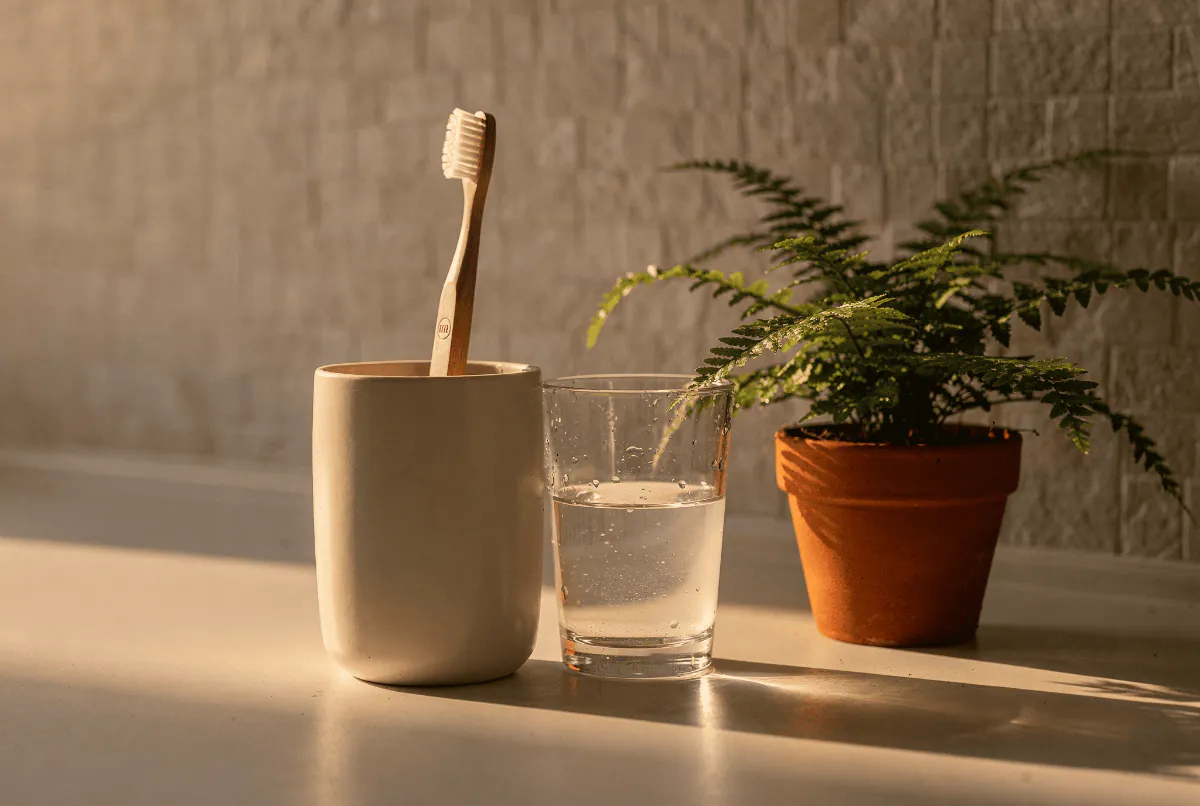
A morning at home — the quiet hour when most readers tell us they think about their health.
Affiliate disclosure: Some links in this article are affiliate links, meaning we may earn a commission at no additional cost to you if you choose to make a purchase. This does not influence our editorial process. Read our full affiliate disclosure.
I'm going to tell you something embarrassing.
For about two years, I'd been doing this thing where I'd cup my hand in front of my mouth before any close conversation. Exhale, smell, decide whether I needed gum or a sip of water. At work, before going into a meeting. With my husband, in the morning before I'd had coffee. With my kids when they came home for the weekend.
I'm 56. I brush twice a day. I floss every night. I see my dental hygienist every six months. And somewhere in my early fifties, my own breath had become something I didn't trust anymore.
The dental anxiety started around the same time.
My cleanings had been getting progressively more uncomfortable. My hygienist — Dana, who I've been seeing for nearly a decade — would prod a tooth and I'd flinch. She'd quietly note in my chart: "pocket depth increasing." "Slight bleeding lower right." "Mild recession noted on canines." None of it was an emergency. All of it was trending the wrong direction.
By last winter she'd handed me a treatment estimate that included a deep cleaning, possible crown work, and a referral to a periodontist if things didn't improve. The number at the bottom of the page was over $4,000, and that was just for this round.
I went home and cried in my car.
What I tried (and what didn't help)
A simple morning ritual: water, a soft brush, a plant on the counter. Less can be more.
I had been doing all the things you're supposed to do.
I'd upgraded to an electric toothbrush three years earlier. I'd added a water flosser to the routine after my hygienist suggested it. I was using a stronger antibacterial mouthwash. I was brushing for the full two minutes, twice a day, sometimes three. I'd even started flossing twice a day after the bleeding got worse.
It made things worse.
I didn't know that yet — but every single one of those changes, I would later learn, was making my underlying problem more entrenched. Brushing harder was wearing down my gum line. The strong mouthwash was nuking the bacteria my mouth needed alongside the ones it didn't. The water flosser was disrupting tissue that needed to be left alone to heal.
I was doing more, harder, with stronger tools — and getting worse results every six months.
The thing my hygienist said
Last spring, at my regular cleaning, Dana finished the scale and said something I'd never heard her say in nine years.
"You know, sometimes I wonder if we're a little too aggressive with all this. The mouthwash, especially. It kills everything down there. The bad guys and the good guys both."
I sat up. "The good guys?"
She laughed. "Yeah. Your mouth has its own ecosystem. There's been some interesting research on it lately. Probably not relevant here, but still — sometimes I wonder."
She moved on. Started talking about my next appointment. But the comment had landed.
I went home and Googled "good bacteria in your mouth" and fell down a rabbit hole that completely changed how I thought about everything I'd been doing.
What I wish someone had told me at 50
Here's what I learned, and what I find genuinely upsetting in retrospect.
The connection between the oral microbiome and gum health isn't fringe science. It's not woo. There are hundreds of peer-reviewed studies on it. Researchers at major universities have been writing about it for years. There are dental schools where it's now part of the standard curriculum. And in nine years of cleanings — and I imagine forty-something years before that — not a single dentist or hygienist had ever brought it up to me, except as Dana's offhand comment that one afternoon.
The basic idea, simplified: your mouth is home to over 700 species of bacteria, most of which are not harmful and many of which are actively beneficial. Some produce compounds that protect tooth enamel. Some compete with the bacteria responsible for bad breath. Some help maintain the right pH balance. Some — and this is wild — produce nitric oxide that helps regulate blood pressure.
When this ecosystem is in balance, your mouth maintains itself. When it's not — when the beneficial strains are depleted and the harmful ones overgrow — you get the slow-motion problems that show up at midlife. Receding gums. Persistent bad breath. Sensitivity. Bleeding during cleanings. Cavities forming in places you used to never get them.
The frustrating part: research suggests this oral microbiome shift happens to most people over time. Stress, diet, certain medications, and — ironically — many conventional oral care products accelerate it. Antibacterial mouthwash in particular acts like a wildfire through your mouth's bacterial ecosystem. It kills the bad strains, but it also kills the good ones, and the bad strains tend to recolonize first.
Suddenly everything I'd been struggling with had a possible explanation that wasn't "you're getting older and your gums are deteriorating, sorry."
Why "brush harder, floss more, stronger mouthwash" stops working
This is the part that made me angry, honestly.
The conventional advice for anyone with gum issues is essentially: do more of what you're already doing. Brush harder. Floss more. Switch to a stronger mouthwash. Maybe get a Waterpik.
It turns out there's a reason that approach can backfire after a certain age, especially in a mouth where the microbiome is already imbalanced.
Stronger mouthwash kills indiscriminately. The good bacteria that protect against the bad bacteria get wiped out, and the bad bacteria — which are often more aggressive at recolonizing — come back stronger and crowd out the good ones. The net effect of years of antibacterial mouthwash, the research suggests, can be a mouth that's less protected than one that uses none.
Brushing harder physically wears down gum tissue, accelerating recession.
Aggressive flossing in already-inflamed tissue can perpetuate the inflammation rather than resolving it.
This is why people in their 50s and 60s can be doing everything "right" by conventional standards and still see their gum health steadily get worse. The conventional standards were written for mouths that work like they did in your 20s. After a certain age, the rules quietly change — and almost no one tells us.
For decades I'd treated my mouth like a problem to be controlled. The reframe — that it was an ecosystem to be supported — changed everything.
If you want to understand the research on this for yourself, the team I eventually found put together a detailed presentation on the oral microbiome and how it shifts with age. It's worth watching if you've been frustrated by gum issues that conventional advice hasn't addressed.
I want to be clear about something: there's no single magic bullet here. Oral microbiome health is downstream of many factors. The first things I changed were the obvious ones.
I stopped using the antibacterial mouthwash. Cold turkey. I switched to a simple saltwater rinse some mornings, and most days nothing at all.
I downgraded my brushing pressure. Dramatically. The kind of soft brushing that felt almost ineffective, the kind that wouldn't have satisfied me a year earlier.
I switched from a whitening toothpaste (which I'd been using for years and which contained ingredients that, I learned, are particularly hard on the oral microbiome) to a simple fluoride toothpaste without sodium lauryl sulfate or harsh additives.
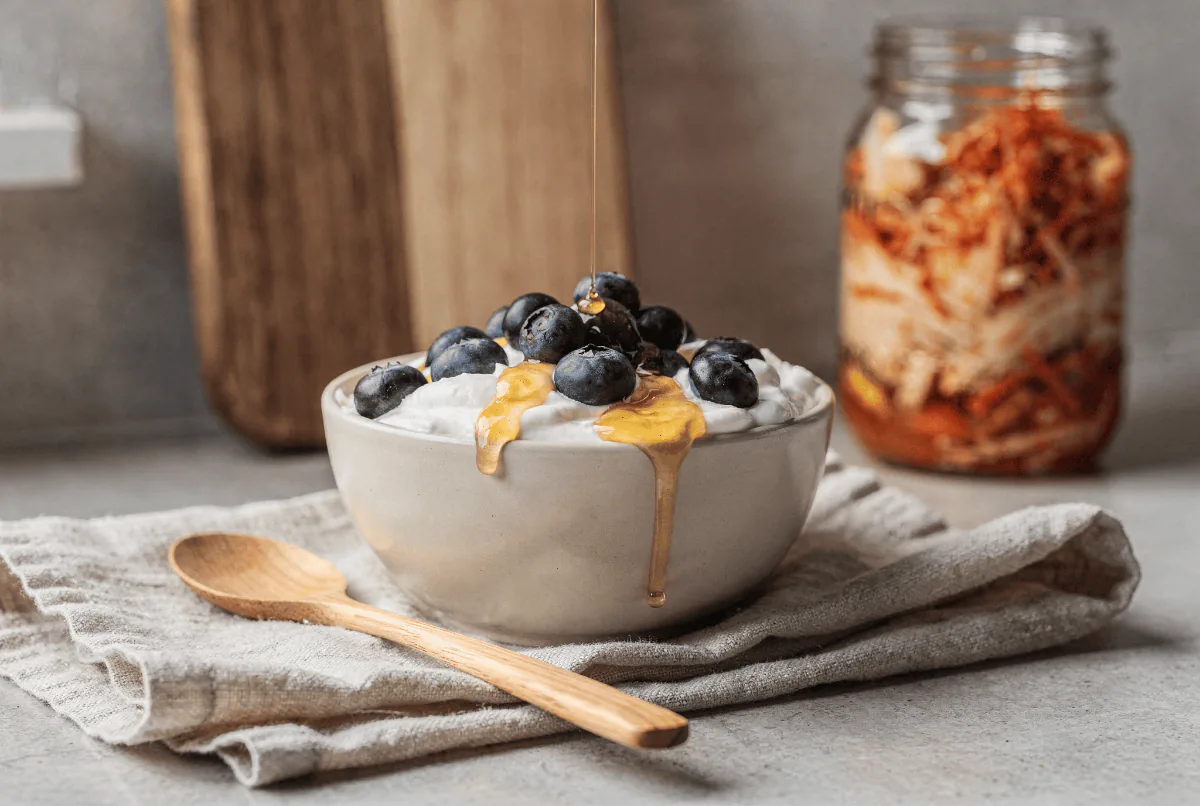
I added foods that researchers had linked to oral microbiome support. More fermented foods — small amounts of yogurt with live cultures, occasional kimchi, kombucha. Foods rich in nitrates, which feed the beneficial bacteria that produce nitric oxide. Less sugar, especially the slow-release kind in sweetened drinks that bathe the teeth all day.
I felt slightly better after about a month of this. Not transformed. But the constant tenderness when I brushed had eased a bit. My mouth felt — I don't know how else to say this — less besieged.
Which gave me hope that the framework was right, even if I needed something more.
The piece I was missing
The next layer I started exploring was supplementation specifically aimed at oral microbiome support.
This is where the rabbit hole got deep — and where I had to be careful, because this is also where the wellness industry has gotten predatory. There are dozens of "oral health" products on the market, most of which are essentially repackaged generic probiotics with a dental label slapped on. Many contain strains that don't even survive long enough in the mouth to do anything useful, because they're designed for the gut.
But there's also a smaller body of research on specific bacterial strains that have been studied in the mouth specifically — strains like BLIS K12 and BLIS M18, which were originally isolated from people with unusually healthy mouths and which have actually been shown in clinical studies to colonize the oral cavity and support the kind of microbial balance I'd been reading about. Combined with certain mineral supports for tooth and gum tissue, and a few botanicals with research behind them, these targeted formulas are a category apart from generic probiotics.
I'd been taking a generic probiotic for months without much to show for it. What I eventually found was a formula that combined oral-specific probiotic strains with mineral support and botanical compounds at doses that actually matched what I'd been reading in the research. It's called PurDentix, and it was developed specifically to support oral microbiome balance in adults dealing with the kind of progressive gum and breath issues I'd been struggling with.
I want to be clear: I had low expectations going in. After two years of progressively worse cleanings, I was past the point of getting excited about any single product. I started taking it because the formulation matched what the research literature was pointing to — not because I'd been promised any specific outcome.
If you want to understand the science behind oral microbiome support and how PurDentix is formulated, the team behind it put together a thorough presentation walking through the research. It's the resource I wish I'd had two years before I found it.
About three weeks in, I realized I'd stopped doing the breath-check thing. I hadn't decided to stop — I'd just gradually stopped reaching for the gum, stopped cupping my hand before close conversations. The chronic low-level anxiety about my own breath had quietly faded.
The next thing was at my dental cleaning a few months later.
Dana finished the scale, paused, and said: "Things look better in here." She didn't elaborate much, and dental hygienists are appropriately careful about not making promises. But I could tell from how she said it that she meant it. The bleeding she'd been noting at recent visits was reduced. The tenderness I'd had during the cleaning was less.
The slow trajectory I'd been on — pocket depths increasing, recession progressing, treatment estimates ratcheting up — had stopped.
I'm not going to claim PurDentix was the only thing that made the difference. The lifestyle changes — stopping the antibacterial mouthwash, brushing softer, eating differently — all mattered. But it was the piece that pulled the others together. It was the layer that took the foundation I'd been building and made it actually work.
I take it every morning now. It's been the single most consistent change in my routine for almost a year.
Why I'm writing this
I started this article a year after that first conversation with Dana. I'm writing it because I have at least a dozen friends who are exactly where I was two years ago — frustrated by gum issues that aren't getting better despite doing everything "right," anxious about the cost of the dental work that's coming, embarrassed by their own breath, slowly resigning themselves to feeling worse with every cleaning.
If you're in that group, the thing I most want you to take from this isn't necessarily "go buy this supplement." It's that the explanation for what you've been struggling with might be more biological than personal. It's not that you've been brushing wrong. It's not that you haven't been trying hard enough. The conventional approach you've been told to follow may simply be missing a layer that, until recently, almost no one in the dental world was talking about.
PurDentix is what worked for me. I take it every morning. The research behind it is the most thorough I've found in the oral microbiome support space, and the people who run the company seem to actually care about doing this well — which is rare in the supplement industry.
If you want to learn more about the science and decide for yourself whether it's worth trying, the link below goes to their presentation. It walks through the research in a way that's accessible without being dumbed down.
What I'd tell my 50-year-old self
If I could go back to the version of me sitting in my car in the dental office parking lot last winter, looking at a $4,000 treatment estimate and feeling like my body was just falling apart — here's what I'd say.
It's not just you. It's not because you weren't trying hard enough. There's a real, specific, biological reason your gums and your breath have been getting worse despite your best effort, and the reason has a name. Your dental team isn't usually going to bring it up because dental training has historically focused on mechanical care — brushing, flossing, scaling — and the microbiome research is newer and not yet standard curriculum at most schools. The wellness industry isn't usually going to bring it up because "buy a stronger mouthwash" sells more product than "consider that you might be using too much of the wrong things."
The good news is that the oral microbiome isn't fixed. The research suggests it can be supported, sometimes substantially, with the right combination of lifestyle changes and the right targeted supplemental strains. The bad news is that no one's going to hand you that information — you have to find it yourself.
That's why I'm writing this. So at least one person somewhere reads it and starts looking in the right direction earlier than I did.
If you want a place to start, watch the PurDentix presentation. It's the clearest explanation of the science I've found, and it's free.
Watch the full presentation. The team behind PurDentix put together a detailed walkthrough of oral microbiome health and how their formula works. It's the resource I wish I'd found two years ago.
Catherine Walsh is a Contributing Writer at Daily Rooted Health, where she writes about wellness, longevity, and the science of feeling well after 50. The views expressed here are her own. This article contains affiliate links — see our affiliate disclosure for details. Statements in this article have not been evaluated by the FDA. PurDentix is not intended to diagnose, treat, cure, or prevent any disease. Individual results may vary.
This article is for informational purposes only and is not intended as medical advice. Statements about supplements have not been evaluated by the FDA. These products are not intended to diagnose, treat, cure, or prevent any disease. Consult your healthcare provider before starting any new supplement.